What a Gen Z Campaign Needs Before Creator Casting
Start a Gen Z creator brief with the audience’s current relationship with the brand and the response the campaign needs to influence.
A campaign brief built around “Gen Z” needs an audience condition attached to it before creator selection begins.
ADWEEK examined 10 brands that recently changed their marketing to reach younger consumers, including American Eagle and Nespresso. The analysis used Morning Consult data to ask whether those changes are working.
That structure gives influencer teams a better place to begin. The demographic tells the team who it wants to reach. The audience baseline shows what the creative work needs to influence.
A low trust score needs context
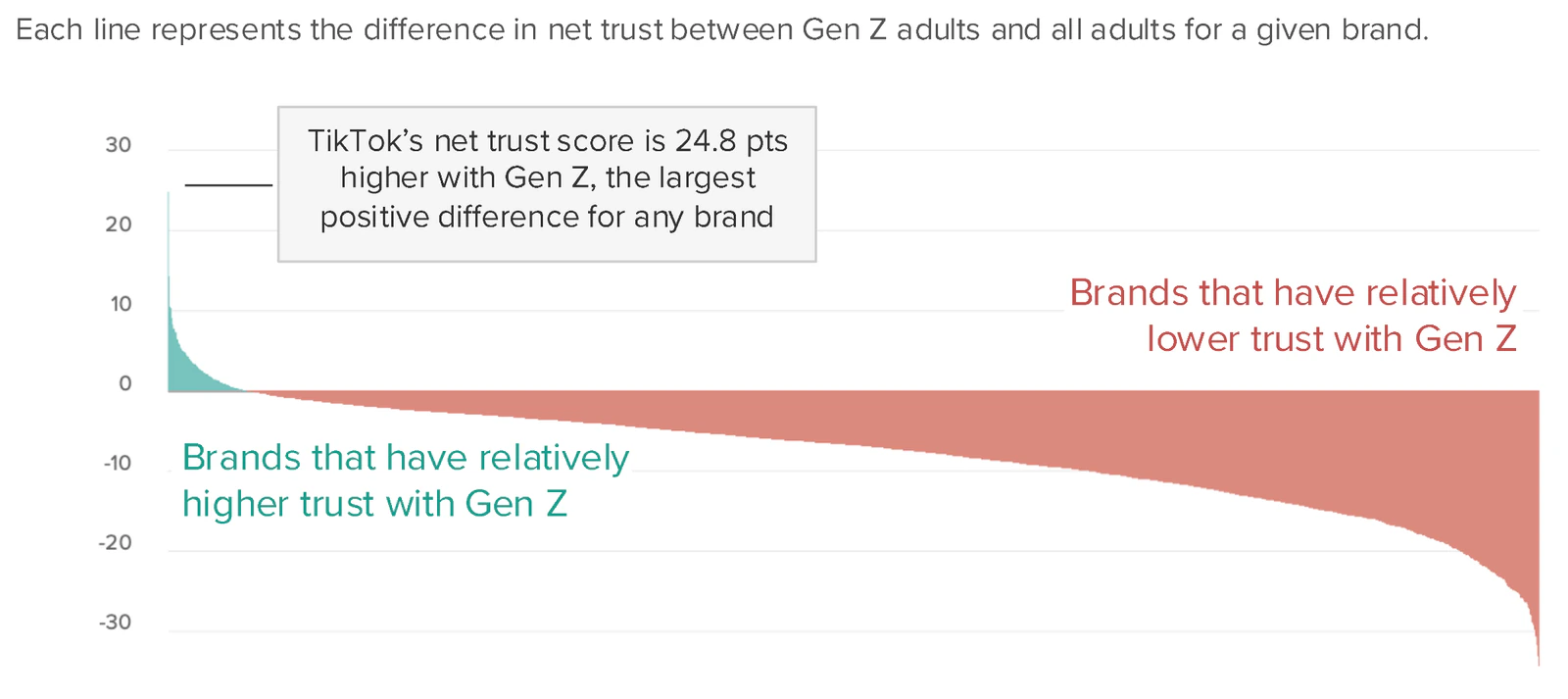
Morning Consult’s 2026 research found that 94% of the brands it tracks had lower net trust with Gen Z than with U.S. adults overall. Gen Z averaged about eight points lower.
The study covers more than 3,200 brands, with an average of more than 10,000 survey responses per brand. Morning Consult measures net trust by subtracting the share of people who distrust a brand from the share who trust it.
Source: Morning Consult
Source: Morning Consult
The explanation behind the gap is more useful for a brief than the headline number alone. Younger consumers have had fewer years of repeated exposure to many established brands. A lower score can come from that shorter history.
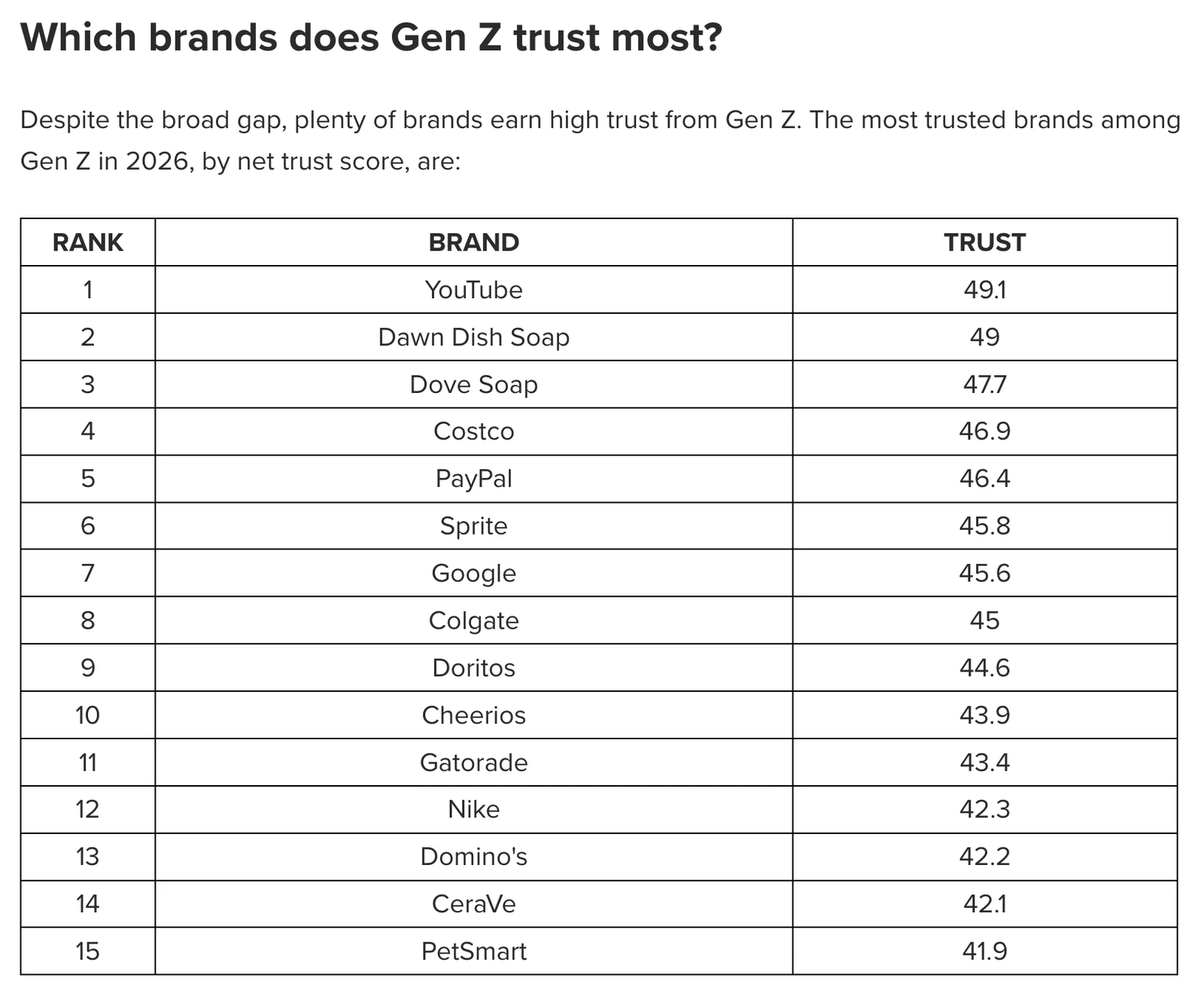
Some digital-native brands and creator tools move in the other direction. TikTok, CapCut, Fenty Beauty, and Duolingo are among the brands that over-index with Gen Z in Morning Consult’s data. The audience already has a different relationship with those companies.
Give the creator a specific problem
Once the team understands the brand’s starting point, it can decide what the audience needs to experience or understand.
A legacy brand with limited exposure may need the creator to make the product feel relevant to a current routine. A company with strong awareness and weak trust may need a familiar use case that changes how people understand it.
That diagnosis also makes creator selection easier to explain inside the company. The team can connect a creator’s format and audience relationship to the response the campaign is trying to produce.
For a future pitch, I’d put the audience signal in the deck before shaping the creator idea around it. One sentence can name the audience response the idea is built to influence. I’d use the same signal when evaluating the work after it runs.
Thanks to Brittaney Kiefer and Rebecca Stewart at ADWEEK for examining the marketing changes against consumer data.