Coca-Cola Wants Creators Connected More Directly to Sales
Coca-Cola’s agency review shows why creator briefs and case studies should connect the creative work to the behavior a campaign aims to influence.
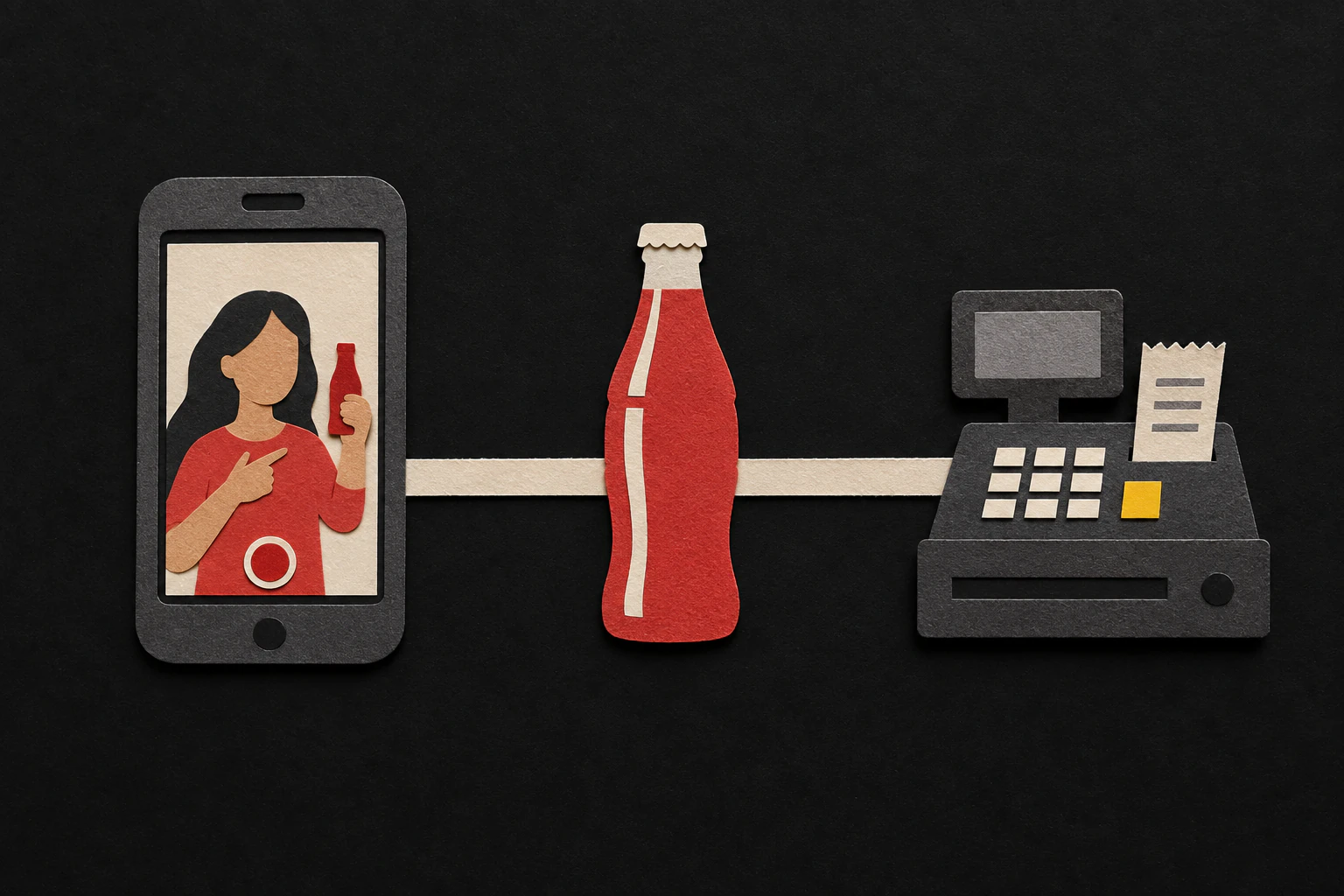
Coca-Cola has its $4 billion global media, data, and technology account under review, and creators are part of what the company wants its next agency partner to handle better.
Ryan Joe reported for ADWEEK that Coca-Cola Chief Marketing and Customer Commercial Officer Manolo Arroyo wants deeper integration among creators, retail media, commerce, live experiences, and retail experiences. He also wants stronger attribution between marketing investment and sales, transactions, and consumption.
Coca-Cola has also changed the way it evaluates marketing. Arroyo described a shift toward actions and behavior, with consumption carrying more weight than an abstract measure of how people feel about the brand.
Creator work gets stronger when the creative goal and the business goal are clear before production starts.
Give the creator a defined business job
When I build a sponsored Reel, I want the brand to fit the format and give the audience something worth watching. I also want enough context about the campaign objective to understand what the content needs to accomplish for the brand.
An influencer marketer can name the behavior or business result the campaign aims to influence, then give me room to build the integration around the audience and format I already know.
That context changes the decisions I make. A campaign focused on product consideration may need the Reel to show how the product fits into a familiar situation. A retail campaign may need viewers to remember a specific product or offer before their next shopping trip. The objective tells me which details have to survive the edit.
Attribution belongs to the full campaign
A creator does not control every part of the measurement system. The brand may connect creator content with paid media, retail data, promo codes, site behavior, brand-lift research, or another signal available farther down the funnel.
The brief should explain which signals matter and what the creator needs to do so the brand can read them. That could affect the call to action, the link setup, the usage plan, or the product information that appears on screen.
The creator can then concentrate on the work only they can do: make content that fits the format, respects the audience, and gives the campaign objective a clear role in the story.
Case studies need the campaign objective
I try to carry the same context into my case studies because a brand needs to understand how the content worked and where it fit into the larger campaign.
Performance and audience response explain part of the result. The campaign objective explains what the brand asked the work to influence. Paid usage and brand-supplied measurement can show how the company extended or evaluated it.
When the information is available for public use, every creator case study should document the campaign objective alongside the creative format, audience response, organic performance, paid usage, and measurement the brand shared. That gives an influencer marketer enough information to understand both the content and its business role.
Thanks to Ryan Joe at ADWEEK for covering Coca-Cola’s agency review.