Android Earned Its Logo on Oscar Piastri’s 350,000-Bead Helmet
Android and Google brought Oscar Piastri to the Peranakan Museum, where Angeline Kong and Carolyn Law explained the 350,000-bead helmet they made.
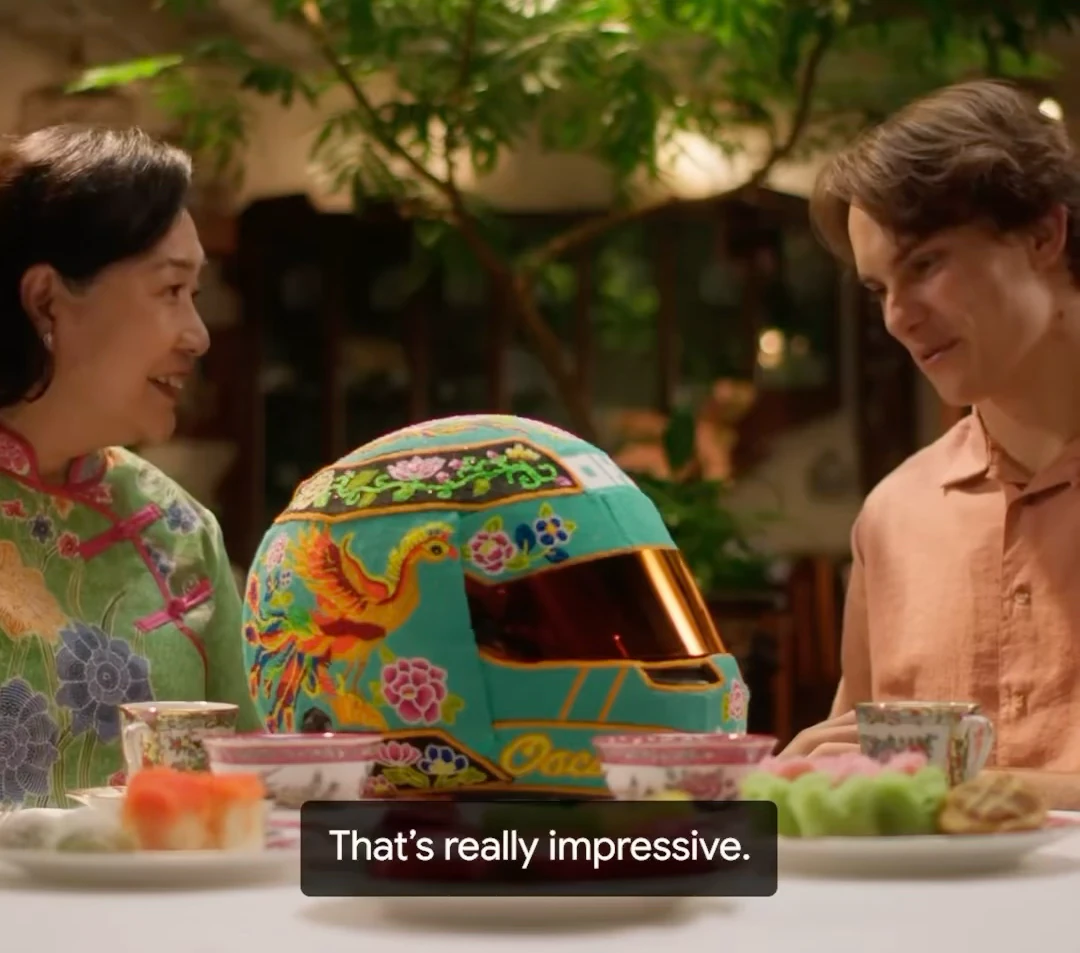
Android put its logo on a Formula 1 helmet covered in 350,000 glass beads, and I believe every inch of that logo belongs there.
My test for brand integration is simple: remove the sponsor and see what falls apart. Here, the helmet disappears. Android used its McLaren partnership to bring Oscar Piastri into the Peranakan Museum for a collaboration with beadwork artist Angeline Kong and Carolyn Law Yu-Lin, a Singaporean artist and art educator whose work explores her Peranakan heritage. Android commissioned the object at the center of the story and built the campaign around the artists explaining their own work.
Part 1 follows Piastri into the museum, where Kong welcomes him and introduces the helmet. He arrives as a guest. That position is important. He is there to learn about the culture around the object, with Kong guiding the visit.
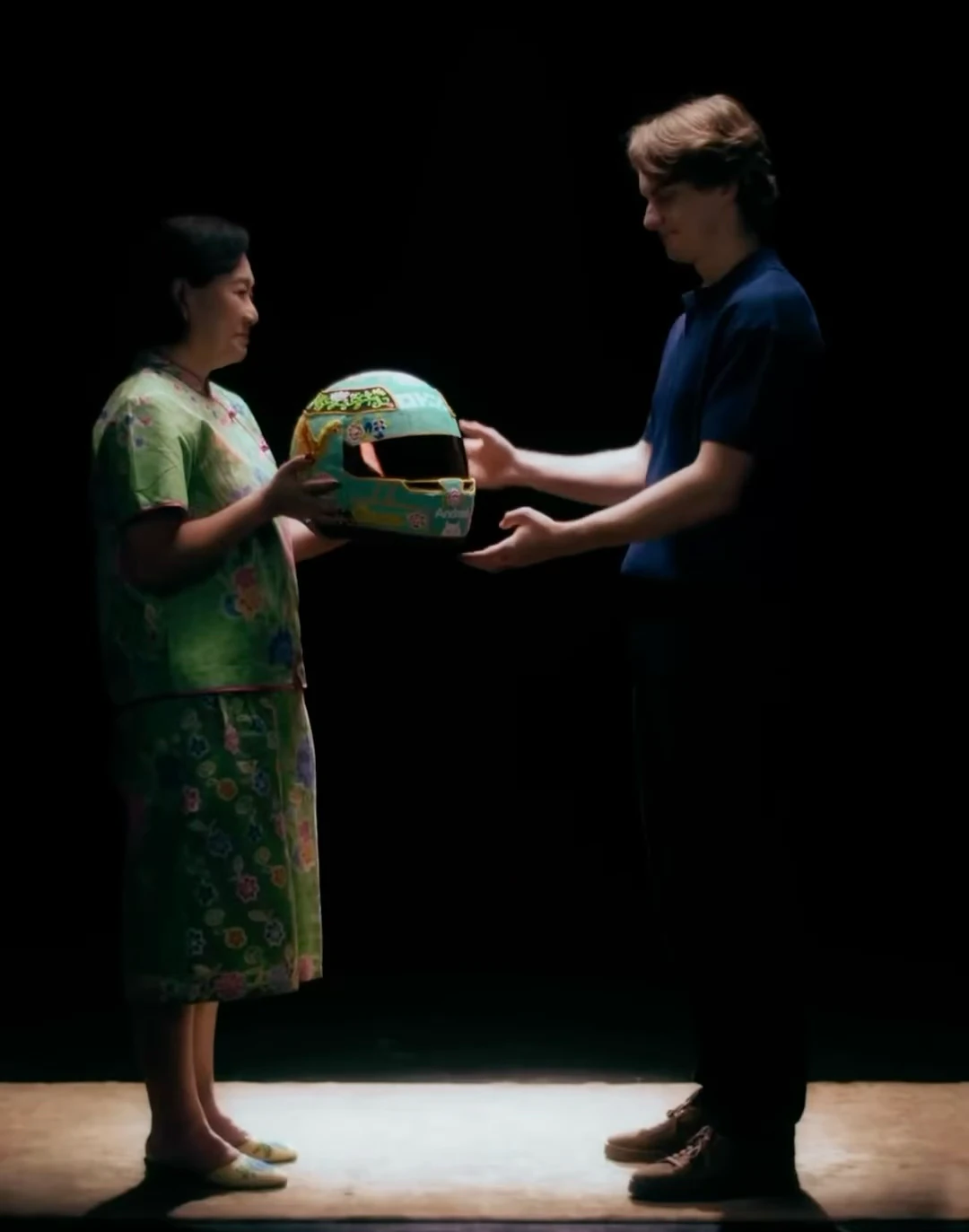
In Part 2, Kong and Carolyn explain the choices themselves. They spent around two months sewing the 350,000 glass beads by hand. Kong explains that the phoenix represents virtue and prosperity and the turquoise carries joy and happiness. Carolyn talks about passing the craft to younger people. Piastri listens, asks questions, and says this is his favorite special helmet he has worn in Singapore.
Piastri’s celebrity brings viewers into the museum, where Kong and Law lead the conversation. Android’s logo fits because the company commissioned this particular helmet. I have written before that a good brand integration should be harder to remove than the logo.
Android built a damn smart brand activation.
How Android created a cultural exchange
A global company can enter a culture, grab the prettiest visual language, and leave with campaign assets. We have all seen it happen.
Android names Kong and Law and films them discussing their work inside Singapore’s Peranakan Museum. The artists explain the phoenix, the turquoise color, the labor, and the future of the craft while Piastri listens and asks questions.
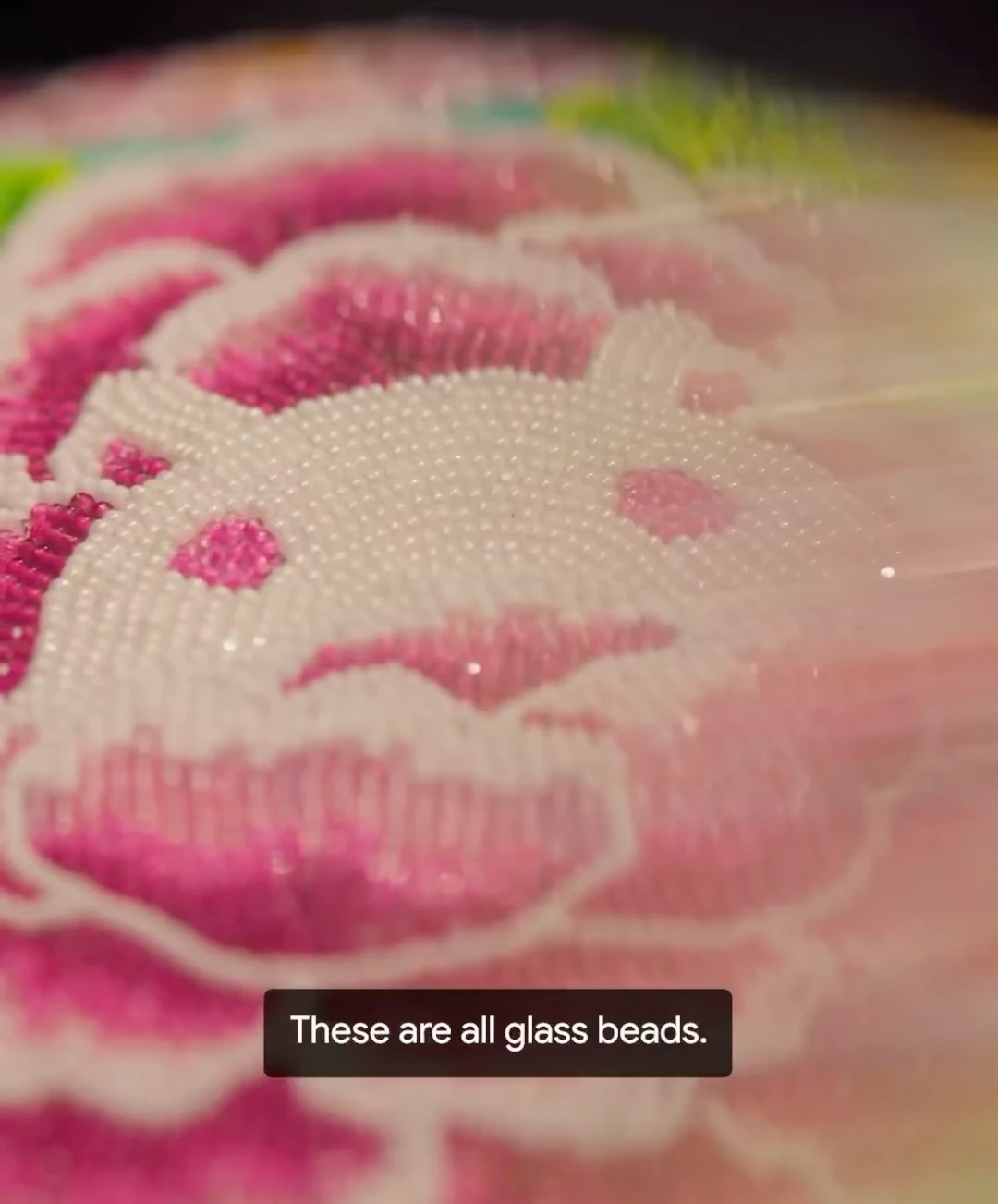
Kong has nearly 30 years of experience with Peranakan beadwork. The Peranakan Museum describes her as a sixth-generation Peranakan who teaches the heritage and craft behind kasut manek, or beaded shoes. Her authority exists outside this campaign. Android puts that authority on camera.
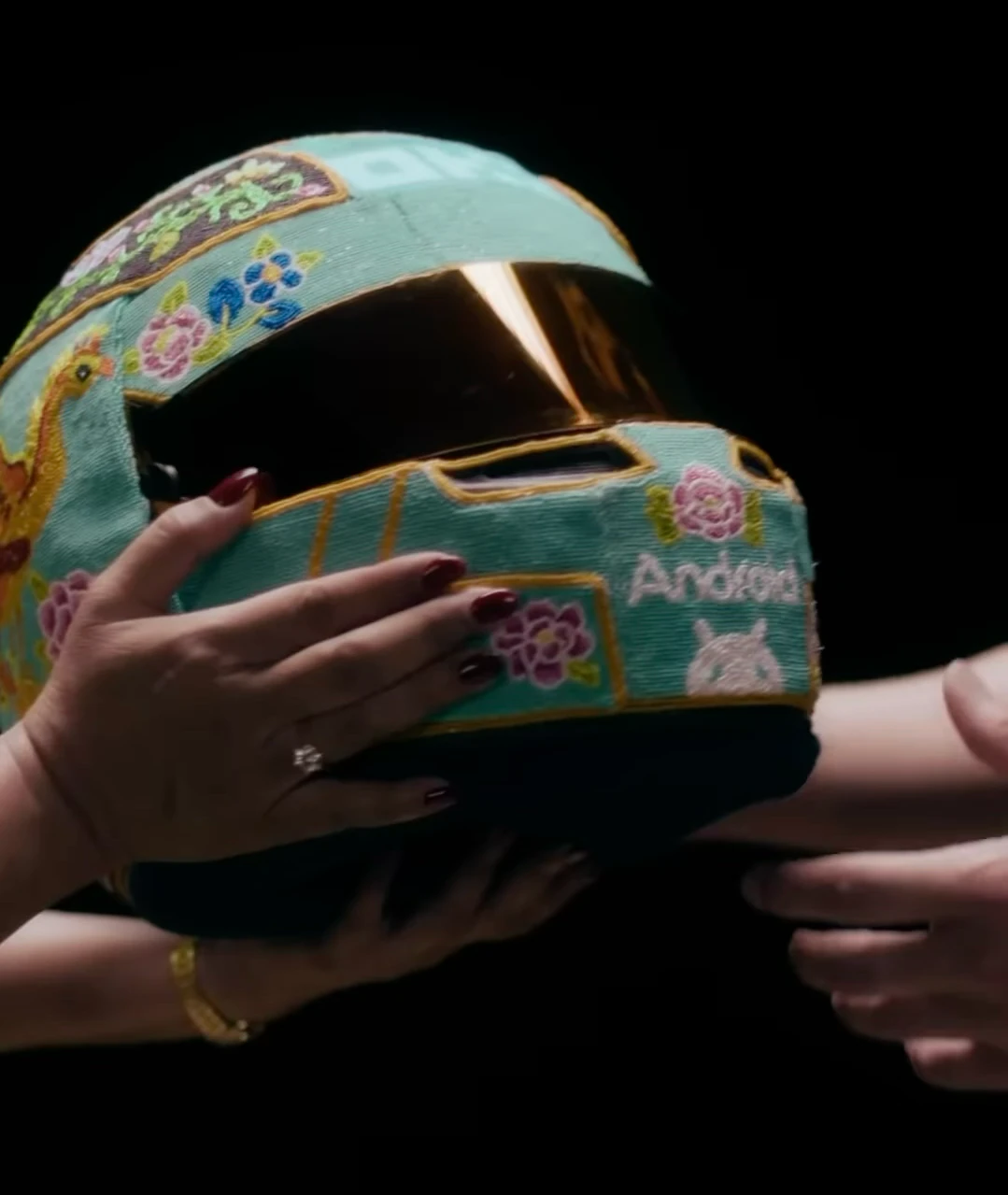
That choice changes how I read the work. The helmet uses cultural material, and the people who hold the knowledge tell us what we are looking at. The audience meets the makers alongside the famous athlete.
The public campaign materials leave the artists’ fees, ownership of the handmade helmet, and approval rights over later commercial use unreported. Those terms determine whether the exchange remains fair behind the camera. On screen, the campaign credits the artists and lets their knowledge drive the film.
Android turned brand visibility into patronage
Google is a primary partner of the McLaren Formula 1 Team. McLaren uses Android devices during the season, which gives Google a credible technical role in the racing operation. The Peranakan helmet expands that sponsorship with an object made for Singapore.
Android put a traditional craft on one of the most photographed objects of a Grand Prix weekend. The helmet can travel across Android’s channels, Piastri’s audience, McLaren coverage, sports press, and race-day photography. Every close-up invites the same question: Who made that? The film answers with names.
Android gets enormous visibility while Kong and Law receive time, attribution, and access to an audience gathered around Piastri and Formula 1. The makers explain how every bead got there, so the helmet can carry commercial and cultural meaning at once.
I want the brand to have a job in the video
When I develop creator strategy, I want the brand to affect the action. A useful product can solve the problem in the video, while a service might determine where the creator goes. Sponsorship money can fund access or put an object in front of the audience that they would never see otherwise.
A useful brief asks more than “How do we feature the logo?” I want to know what the company can make possible and who needs authority inside the story. Before anyone writes the talking points, the team should know why the audience would care. The finished content should also offer something concrete, whether that is a laugh, a useful demonstration, or an introduction to artists and a craft the viewer may not know.
Android’s helmet campaign can withstand scrutiny because the sponsorship is doing work. Google already belongs in McLaren’s world. Android uses that position to commission a specific object with local meaning, and the brand lets the artists explain it in their own words.
More brands should spend their sponsorship money this way. Android used its budget and access to commission an event people wanted to discuss. The artists remained visible, and the logo sits on something the campaign brought into the world.
Marketing-Interactive reported the production details and campaign rollout. Credits shared around the work point to THE·TEAM, formerly Wasserman, with Nath Mallon as a creative lead. Mallon’s portfolio identifies him as a Group Creative Director at THE·TEAM and lists Google’s Android business among his clients. A complete public production credit list was not available when this article was written.